| |
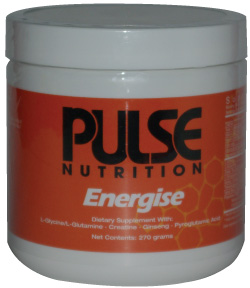
Energise
(formerly known as Over 30)
 Growth
Hormone Enhancing Formula Growth
Hormone Enhancing Formula
270g Powder – Product Code 1008
Whilst HGH is essential to the physical development of children, it is also vitally
important in adults for energy, fat and sugar metabolism, mental competence, DNA,
tissue repair, strength, bone density, skin tone and the immune and nervous systems.
However, another hormone called Growth Hormone Releasing Hormone (GHRH) controls
the release of HGH.
After puberty, GHRH begins to decline, restricting HGH secretion and causing signs
of aging, such as increased body fat, bone fragility, weakness, wrinkled skin, reduced
energy, loss of memory and loss of concentration.
Following is an explanation of the part each of the ingredients plays in this outstanding,
synergistically-formulated product
1.
Glycine
A major ingredient
in this formula is Glycine. Glycine is the simplest amino acid and is the only amino
acid that is not optically active (it has no stereoisomers).
Glycine is essential for the production of the DNA building blocks, nucleic acids,
bile acids, porphyrins, other amino acids, and the energy producing compound, creatine
phosphate.
Glycine is the second most common amino acid in body proteins and enzymes. Another
interesting feature of glycine is its similarity to gamma-aminobutyric acid, and
glutamic acid. All three molecules have a neuro-inhibitory or calming effect on the
Brain and Central Nervous System. This is likely one of the mechanisms responsible
for glycine's ability to release HGH.
In addition to the above benefits, there is research that supports glycine as a potent
releaser of HGH. One study showed that 6.75 grams of glycine, taken orally at bedtime,
caused a three-fold increase in blood levels of HGH. In another study, as little
as 250 mg of glycine showed a significant rise in HGH.
2.
Glutamine
Glutamine, like Glycine, has many functions in addition to being a powerful HGH releaser.
It is the food of choice for the cells lining the gastrointestinal tract. It helps
with normal cellular function.
It is critically important for these cells to be able to maintain selective intestinal
permeability (allow digested nutrients through, and keep undigested food and microbes
from being absorbed).
Glutamine has also been used extensively to prevent breakdown of skeletal muscle.
As the body is placed under severe stress, acid build-up can occur, and muscle breaks
down to release glutamine, which acts as a buffer and neutralises the acid through
the liver and allows it to be secreted via the kidneys.
Thus glutamine supplementation is critical in trauma patients, athletes, and in senior
citizens, and could be beneficial to almost everyone.
3.
Mucuna pruriens
Commonly known as velvet bean or cowitch, is a plant indigenous to India. A clinical
study confirmed the efficacy of the seeds in the management of Parkinson's disease
by virtue of their L-Dopa content. Mucuna pruriens, recognised as an aphrodisiac
in Ayurveda, has been shown to increase testosterone levels, leading to deposition
of protein in the muscles and increased muscle mass and strength.
4.
L-Pyroglutamic Acid
Is believed to be associated with activity of the key neurotransmitter, acetylcholine,
and with the production of GABA and glycine, two other important neurotransmitters.
5.
Vitamin B6
Is involved in a wide variety of biochemical reactions, including the synthesis of
the neurotransmitters serotonin, dopamine, norepinephrine and gamma-aminobutyric
acid (GABA). Thus B6 indirectly helps with release of HGH via synthesis of GABA and
dopamine.
6.
Ginseng
Korean ginseng is used as a so-called "adaptogen" for increasing resistance
to environmental stress and as a general tonic for improving well-being. It is used
for stimulating immune function, improving physical and athletic stamina and improving
cognitive function, concentration, memory and work efficiency.
7.
Green Tea Leaf
Green tea is natural dried leaves of the tea plant, Camellia sinensis. Green tea
is a compilation of potent antioxidants. It has a high content of polyphenols, which
are a class of bioflavonoids. Green tea extract is used primarily for its free radical
fighting capabilities, but has a wide range of applications:
8.
Magnesium creatine chelate
This particular form of magnesium chelated to creatine makes it a good substrate
for mitochondrial ATP production. Research supports the fact that Magnesium bound
to creatine in a 1:1 ratio markedly increases cardiovascular performance and reduces
recovery time.
9.
Stevia rebaudiana
A natural sweetener with a long list of other beneficial qualities.
10.
Fructooligosaccharides (FOS)
Also a natural sweetener (known as prebiotics). These are long chain polysaccharides
which can be added for their sweetening effect and, more importantly, serve as a
food for the beneficial intestinal bacteria.
11.
Flanagan Microclusters®
The real value of this product lies in the synergy between all the ingredients. The
amino acids glycine and glutamine, combined with mucuna pruriens and pyroglutamic
acid, have the ability to promote the release of HGH from the pituitary. Vitamin
B6, green tea leaf, ginseng root, and magnesium chelate provide energy, antioxidant
and anti-inflammatory support that are important in maintaining normal cellular function.
This product is best used either at bedtime or 1-2 hours before exercise. HGH is
normally released during sleep between 1-3 am (depending on the time one goes to
sleep), or in response to exercise.
Factors important for optimum HGH release and optimum human performance include:
- High quality sleep
7-9 hours, awakening refreshed, and remembering dreams. It is the pulsing of REM
with non-REM sleep several times at night which promotes the release of GHRH (growth
hormone releasing hormone) from the hypothalamus which then promotes the release
of HGH from the pituitary. Sleep masks are important. Any light hitting the eyes
(or the body) has been shown to decrease the pineal gland production of melatonin
which will definitely interfere with quality and quantity of sleep.
- Exercise both aerobic
and resistance training with machines or weights. Approximately 2-3 times per week
resistance training and 3-4 times per week aerobic (jogging, biking, swimming, stationary
cycles etc,)
- Eat a balance of
vegetables (raw and cooked), with fish, poultry, and some red meat (ideally all organic),
and use extra virgin olive oil liberally. Eat smaller portions and eat about every
4-5 hours. Avoid sugar and simple carbohydrates (white bread, pasta and cereal);
consider sugar substitutes such as stevia, lohan, or xylitol. This is highly individual,
and it is most important to maintain ideal body weight. Bioelectrical impedance devices
can be use to determine the lean muscle to fat mass ratio. It is known that both
a healthy liver and high percentage of lean muscle mass are the two main systems
for maintaining optimal blood sugar levels (fasting sugar between 85-100 mg%). When
blood sugar stays higher for any period over 1-2 hours, there will be extra insulin
released which promotes inflammation and fat storage. In addition, elevated blood
sugar (especially in the evening) releases somatostatin which indirectly will block
the release of HGH.
- Hydration is important
– usually about one half of body weight in ounces of water as a general guideline.
- Stress reduction
or modulation is critical. This can be accomplished with Yoga, Tai Chi or meditation.
Stress increases cortisol, which tends to raise blood sugar and lower DHEA, a critical
hormone in building lean muscle mass.
It is obviously vital to
combine good lifestyle habits with the consumption of this product.
There is no magic bullet in nutrition. Nutritional supplementation should be part
of an holistic approach to health. This includes exercise appropriate to age, fitness
and the individual, and by consciously keeping stress at a manageable level.
 Download
this page as a 100% safe, printable PDF document
Download
this page as a 100% safe, printable PDF document
|






 Our Products
  Nutrition
  Over 30





